Products
As designers create new PDAs and other wireless data devices, consumers hunger for more information and more freedom to deploy it while not sitting at a workstation in an office environment. The expanded use of the Internet has further strained the transmission networks in their need to support wireless mini-browsers, graphics and other IP and HTML based devices. Email and related messaging via wireless is gaining acceptance worldwide and these messages often consist of large image, video and data files. These file types were never designed to be sent over the traditional transmission networks. More speed is needed immediately.
There is a worldwide desire for more information to be transmitted in a limited space and a new paradigm is needed to make it work. Now The FCC is auctioning off the 700 MHz band which is being reclaimed from TV broadcasters to provide potentially differing networks for public safety and consumer use. This 110 MHz of spectrum is nearing the last small slice of contiguous territory and so the present-day wideband wireless format vendors will desire to compete for the business of the operating platform or network format.
Now the USA is taking the 700 MHz band to the World Administrative Radio Conference (WARC) as an agenda item to have it considered to be the next world-standard band for interoperability and intercommunications. This requires intense use of the Internet to make the prospect viable and this will place substantial strain on the platform technology to provide the enormous mobile data speeds demanded of it.
The Public Safety Spectrum Trust (PSST) and CyrenCall Inc. are currently the representative(s) for the Public Safety (PS) interest in the "D" Block segment of the new band as they will gain nationwide interoperable use of it on a priority basis to provide to first responders. This is critical to the future of our public safety infrastructure and we will only get one chance to do it right since everyone will have to share the resources and all subscribers will want a lot more than they get now.
The other blocks of spectrum (A thru C) comprise the larger segment of 60+ MHz will be sold to consumer product vendors and the opportunity is there to make all segments of the band operate with a single data format so that handsets can smoothly move from one block of spectrum to the other.
The transmission format that is chosen today will have a 20+ year impact on the carriers since there will be no going backwards once the ink is dry on the paper. Here are the formats in use today and a short explanation of what can be expected of them based upon past performance.
Currently there are two competing formats for wideband digital transmission of voice and data;
- GSM (Global System for Mobiles) which is essentially a European voice standard developed by a team of engineers in the 1990's and is in use in almost every country of the world as their cellular product. GSM was and still is a voice product so when data became necessary GPRS and EDGE were layered on to the overhead and part of their bandwidth was dedicated to it. All 3 of the GSM layers need a lot of contiguous bandwidth (typically >10 MHz) to serve their subscriber base and the technology is barely surviving at 250-350KBPS of data throughput.
- CDMA (Code Division Multiple Access) was essentially conceived in the 1940's by Hedy Lamarr as a method to secure radio traffic from the Germans during WW-II. It was then reworked in 1995 (IS-95) by Qualcomm and has risen to become the leading contender to GSM for wideband voice cellular networks. When data became necessary over the same network the systems were retooled with EvDo (Evolution Data Optimized) to permit data to coexist with the incumbent voice users. This system also requires large contiguous bandwidth of at least 10 MHz to be of any real value to the system operator and it too has patches and "upgrades" that never keep pace with the demand. They are also at near-maximum network speeds of only 350-450 KBPS of throughput with little hope to increase that over the near term.
Worthy of note is that recently Verizon (the largest network operator deploying CDMA in the US) announced that it will depart from it for the 4th generation of product offering. This is important as Verizon has realized that CDMA is not a viable future technology and we cannot wait 10 more years to invent another one for 700 MHz.
There are essentially two types of "carrier spectrum resources" to be had:
- Wide bandwidth (>10 MHz) contiguous blocks of spectrum that can devote large overhead resources to data and voice which the 700 MHz band in the USA will have and if the current administration has its way, the rest of the world will as well
- Narrower bandwidth and/or non-contiguous channel blocks of spectrum that vary from area to area (examples are P25 digital and Icom/ Kenwood's NXDN operate in these narrow segments of 12.5 and 6.25KHz bandwidth)
The problems:
- The "newest" voice and data format for wideband is CDMA and it is still greater than 15 years old
- Current cellular wideband formats are at peak ability now and result in barely 400KB/ Second data throughput speeds and this only in small selected areas at great cost to the operator
- Any potential "expansion" or connectivity to other frequency bands will require the use of legacy narrowband and non-contiguous channels to function and neither GSM nor CDMA can operate in these modes
- There needs to be "backwards compatibility" for Public Safety and others to interoperate with existing radio communications in legacy systems using the same handset and platform with 700 MHz and neither CDMA or GSM will do this
- Some of the 700 MHz users will be licensed on only a few narrowband channels and neither CDMA or GSM will do this nor will they work with 800 NPSPAC channels or 900 MHz discontiguous channel segments
- Any new system must have full speed delivery of the Internet simultaneously with users voice, LAN/ WAN/ MAN systems interconnectivity and operate uplink and downlink at the same speeds
- Current GSM/ GPRS/ EDGE and CDMA/ EvDO systems do not provide these features to all users in all areas or at the same speeds available at the home/ office environment.
- In virtually all legacy radio systems data is currently transmitted SERIALLY (one bit at a time). While the code format may be MSK, AFSK, QPSK or 2 or 4 levels of NRZ-FSK or FDMA, the information is still sent out one bit or symbol at a time. This limits mobile data speeds on legacy networks to at most 19.2 KBPS.
The solutions:
- The subject of this patent is a method of transmitting multiple bits of data simultaneously within ANY operating bandwidth that the FCC permits. This is called Simultaneous Multibit Transmission© or SMT © which is essentially "PARALLEL" (Non-Serial) data transmission.
- The simplistic concept is to send data in full BYTE format as CPU's do to increase throughput. This way the system sends BYTES rather than bits.
- Utilize the inherent speed-multiplying capability of PARALLEL data processing to resolve the issues such as fulfilling the need-for-speed like wideband provides within NARROWBAND channels
- Where contiguous spectrum exists; use the parallel data capability to multiply the network capability many times over but in narrowband channels simply scale it to the channel bandwidth on-the-fly to intercommunicate
- SMT© can bring new revenue streams to the operator by networking with every country in the world using the lowest level of technology products communicating with the new system
- The ability to mix narrow and wide bandwidth channels seamlessly makes SMT© the only data format in the world able to provide this service.
- The new 32, 64 and 128 bit formats need to be sent "full byte" all of the time and SMT© is the only format that will do this
- SMT© will provide the system operator more revenue from the most subscribers in the least bandwidth since voice-grade clients can be charged less for lower useage while large bandwidth users can be charged according to use and needs
- The system operator need NOT be the Licensee of the SMT© methodology and format; this means that regardless of the auction outcome, the Master License Holder of the SMT© patent can provide the primary operating system, platform and format to the System Operator and share the revenue stream
- Consider the analogy in Microsoft where they did not build or own the hardware but provide the operating system in use in more computers than any other format in the world
Currently there are 2 transmission methods available when the bandwidth is very wide but when the bandwidth is narrow these do not work. They all require substantial bandwidth to operate in due to code and overhead requirements. Until SMT; no technology existed to provide the performance of wideband over narrowband channels or to provide a truly upward pathway with none of the past limitations to the future.
Consider that if SMT© can provide "wideband" capability and beyond in "narrowband" spaces what it will do when permitted the luxury of contiguous new spectrum.
Parallel processing is the way of the FUTURE network operator:
- With SMT© there is no need to buy an outdated platform from GSM or CDMA vendors that is essentially a collection of patches and fixes to make it "Data Friendly" but hopelessly out of date
- The 700 MHz system operator will be faced with choices of whether to include or wholesale exclude other countries from the ability to integrate into the new network. With SMT© you inherently include them in the future potential for delivery
- The Internet is far more data and speed hungry than any prior voice or messaging format, so it needs special and newly focused attention directed to its needs
- Only SMT© can start large and only grow larger with time; the others are nearly at maximum ability and can only software tweak them as they were never designed with full delivery of the Internet in mind
- Consider too that no one would build a new computer and purchase a 10 year old operating system for it. SMT© is the product for the future and has no baggage, patches or Band-Aids to bog it down.
- The new system operator at 700 MHz in the D Block will be required to provide for public safety use of the network and the SMT© data transmission format will give them the interoperability they demand via the Internet
Summary of features and benefits
The wireless transmission industry is constantly under pressure to deliver more in less space and SMT© is ready to provide it. Consider this list of impressive features:
- The Internet is the only way to effectively and truly inter-operate country-to-country and service to service (ie; Public Safety to Private to Commercial)
- Inter-service compatibility is mandated in the 700 MHz band and the common thread is the Internet
- Software engineers can design additional features in that do not impact speed of delivery (like Push To Talk one-to-many calls that can be accomplished on a single radio channel vs one channel-per-user which is bandwidth intensive)
- New formats are now deliverable: High speed TCP/IP to the mobile or portable is a reality
- The faster you deliver it the sooner you get paid and the next subscriber can be served
How this patented format sends bytes rather than bits:
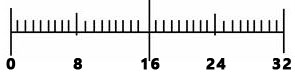
If this is the dynamically allocated bandwidth of the channel assigned to a subscriber then there are several variables that can be modified before and during the transmission.
- The patent divides the channel bandwidth as assigned into frequencies that are the result of the bandwidth divided by the number of bits in the byte of the processor used (8, 16, 32, 64, 128, etc.) these are shown as short "pickets" in the "fence" graphically represented above.
- Each bit is individually turned ON and OFF per clock cycle to signify a ONE or a ZERO in the components that make up each byte. The 1/ 0 data is sent by the presence or absence of RF energy at that particular frequency slot at the time of generation & transmission per clock-cycle.
- The "boundary bits" before 0 and after the 32nd bits define band edges to the adjacent channel neighbor and are under control of the software to define the allocated bandwidth per-call which is changed to fit the demand. This permits narrowband UHF,VHF, 800 and 900 MHz narrowband radio channels to be utilized for legacy systems in place that need to migrate backwards and forwards in the same radio
- The 1st, 8th, 16th, 24th and 32nd bits constitute the number of bits per byte assigned for the transmission (in this example 32 but it can be any binary number)
- The marker bit at the center of the diagram is the "center frequency bit" and it is a keystone; it is poised to be both the clock AND an identifier slot to tell what type of file it is (voice = low requirement, data= high requirement, etc. as examples)
- "Marker" or "Hidden" bits reside between bits 8 & 9 and 23 & 24 as shown and their number varies according to the number of bits in the byte
- These hidden bits are able to be utilized as forward instructions. Examples are to indicate the coding format shift or to tell the system that the format needs to change from low impact to high impact demand like graphic image coming vs. an email text file or other software-defined instructions and can be uninvolved in the actual data stream or involved on demand by the Mobile Telephone Switching Office (MTSO)
- Software defines the frequency divisor, number of bits per byte, number and existence of the marker/ hidden bits and the phase angle of each bit on demand
- Phase angle rotation of each bit provides additional control measures to enhance the delivery and content types and is especially important to the boundary bits as they can tell the neighbor not to cross the lines of channel allocation with certain phase angles assigned as markers
- Bandwidth per-transmission per-channel assigned is dynamically allocated by the MTSO and it knows if an extremely high-demand file is prioritized for transmission and can both forward and reverse-multiplex unrelated and non-contiguous channels together on an as-needed basis to accommodate these demands.
- MTSO overhead can tell the mobile to use these related and contiguous plus unrelated and non-contiguous channels on a channel-by-channel basis for the duration of the data file transfer
Recognition and deployment of the above transitions easily into features-and-benefits to enhance revenue to the system operator:
- Subscriber fees are easily based upon bandwidth allocation and demands, so the ones that have higher demand levels will pay correspondingly higher rates with more revenue to the system operator
- Public Safety will be able to be prioritized by the MTSO in the same way they are now and commercial users will be granted or denied service during emergencies
- P25 intercom capability is possible by simply aligning the digital format in the channel(s) to match the vocoder format of the P25 responder; SMT can be a dual format wideband and narrowband method
- Icom and Kenwood make NXDN (FDMA) digital radios that are good voice grade in 6.25 KHz. SMT can be formatted to communicate with them as well by simply aligning the digital data to match them
- SMT is the ONLY format that is instantly capable of dynamically varying the bandwidth from wide to narrow on the fly to accommodate multiple frequency segments
- Simultaneous grouping of subscribers is possible and practical with this technology to approach the "multiple capcode" system utilized by paging text receivers to alert one-to-many subscribers to an event with a single transmission
- Dynamically allocating bandwidth per-call and excellent frequency reuse patterning offers "group calling" or "all-call" capability of any wireless network by allowing one-to-many calling.
- With parallel byte processing and dynamic channel bandwidth allocation we can offer more to the end user at less operator cost to speed ROI on the entire system.
Existing technologies support this future for communications excellence; all of the components are in place now to capitalize on this technology:
- ArrayComm has exceptional electronically steered antenna systems that will permit outstanding cell frequency reuse patterns and multiple calls per-group-per-cell to maximize use of the bandwidth
- Software Defined Radio is here now; SDR is the way of the future for all high-volume data rate transmissions with high technology today and a constant-improvement pathway to the future
- The 700 MHz system will seamlessly communicate with existing VHF, UHF and 800 MHz analog and digital PS systems in place now for 100% interoperability which is a congressional mandate to achieve.
- New subscriber units can be rendered hacker-proof by use of biometric key coding and recognition which will deny use of the unit to all except the proper owner
- E-911 compliance issues are resolved with currently available GPS chipsets and small packets of Location Based Services (LBS) data imbedded into the bitstreams without impacting the voice and data
- Existing cellular call setup, handoff and other features can be easily implemented and maintained... this is a well established technology with no need to replace it.
- Established data encoding and protection formats (Welsh, Manchester, etc.) transition to this format easily so they keep development costs to a minimum
- Software Defined Radio makes the new product agile and format independent while Over The Air Reprogrammability (OTAR) can flash update subscriber units to new capabilities on the fly
- Keeping the pieces of established cellular networks (billing, encryption, data inputs, cell frequency reuse, handoff, etc.) allows us the benefit of picking and choosing what parts we keep.
Licensing and acquisition
The next step is to license the technology and be the first in your industry to have this revolutionary enhancement that will surely permeate the entire wireless business.
The companies that choose to lead in this essentially uncharted path will have the Master License to offer Sub Licenses to interested followers that will hear of this in the media.
Additionally, we have exciting CIP documentation that has evolved over the course of the patent application period where we feel that many orders of magnitude of increase may be realized. These will be forthcoming as they are in design and print stage now.
Be a part of this exciting future as we create the last frontier in data communications. Call today for more information and to sign on as a partner in this new spectrum as we bring it to the entire world.